
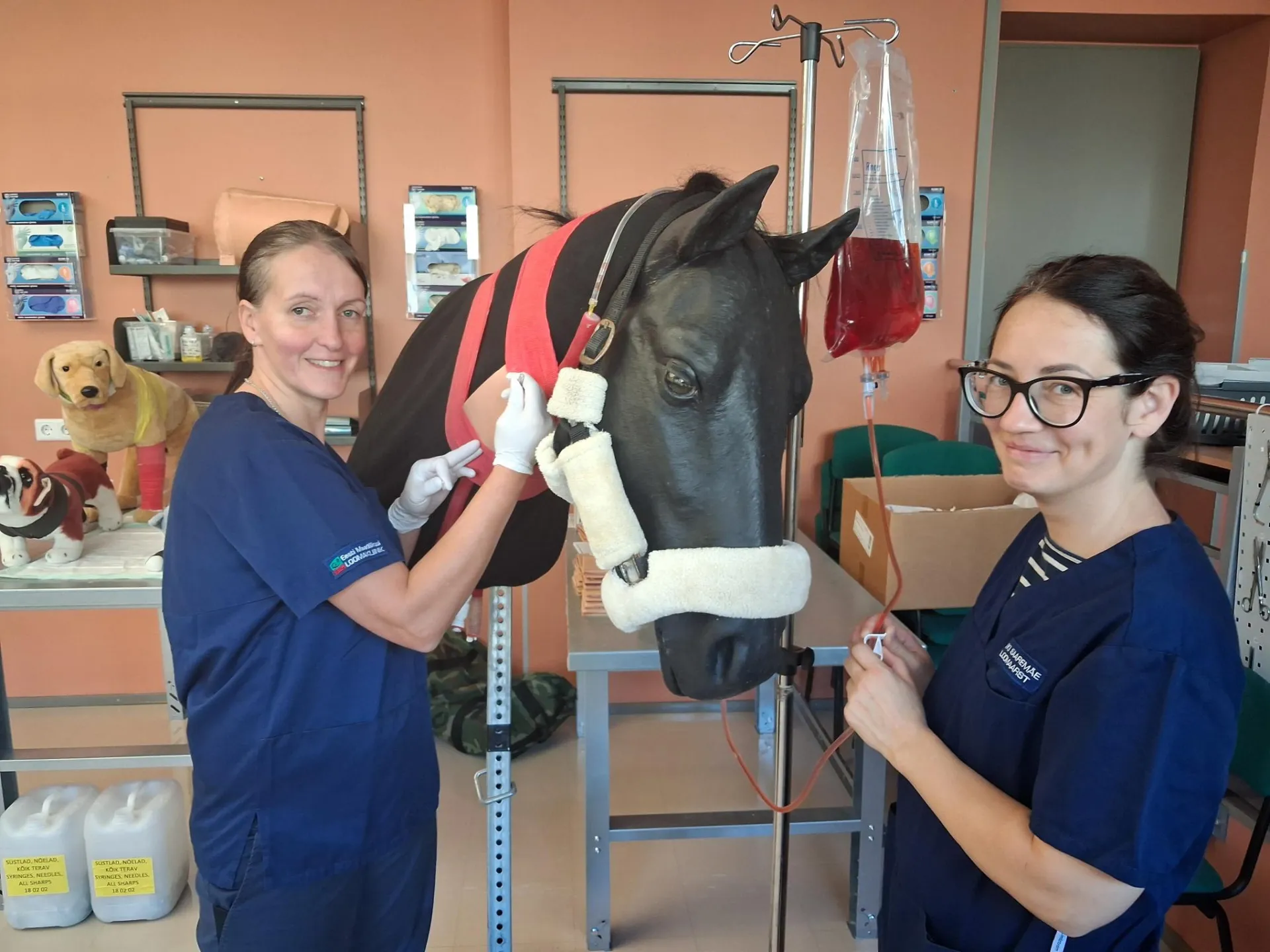
“Never the first time on a live animal” is the principle guiding teaching in our institute’s Clinical Skills Lab. Here, future veterinarians can practise procedures in a safe environment, with animal welfare in mind, and build confidence before working with a real patient. This autumn, veterinarians and lecturers Triin Rilanto and Aiki Saaremäe have become the lab’s principal instructors.
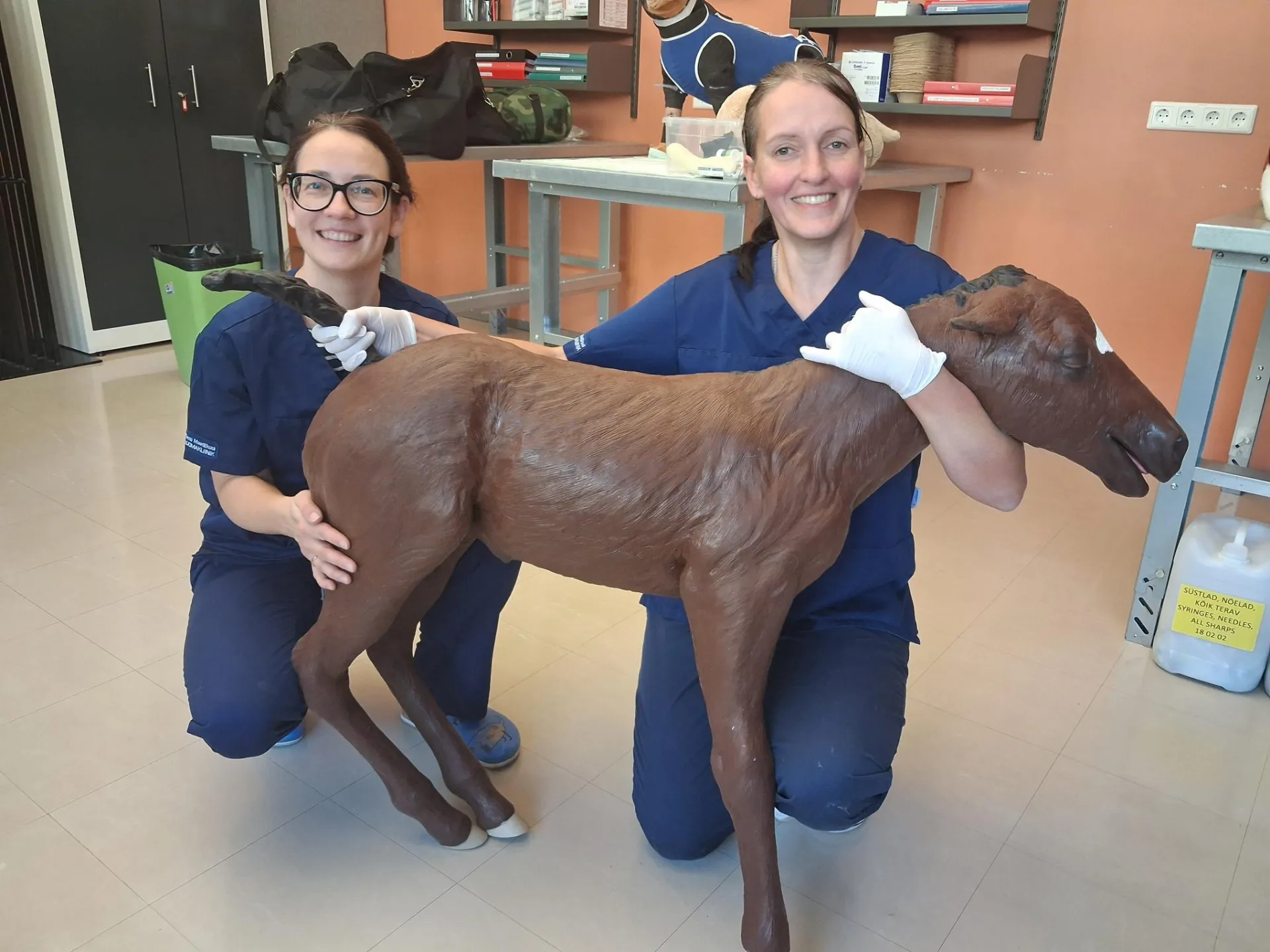
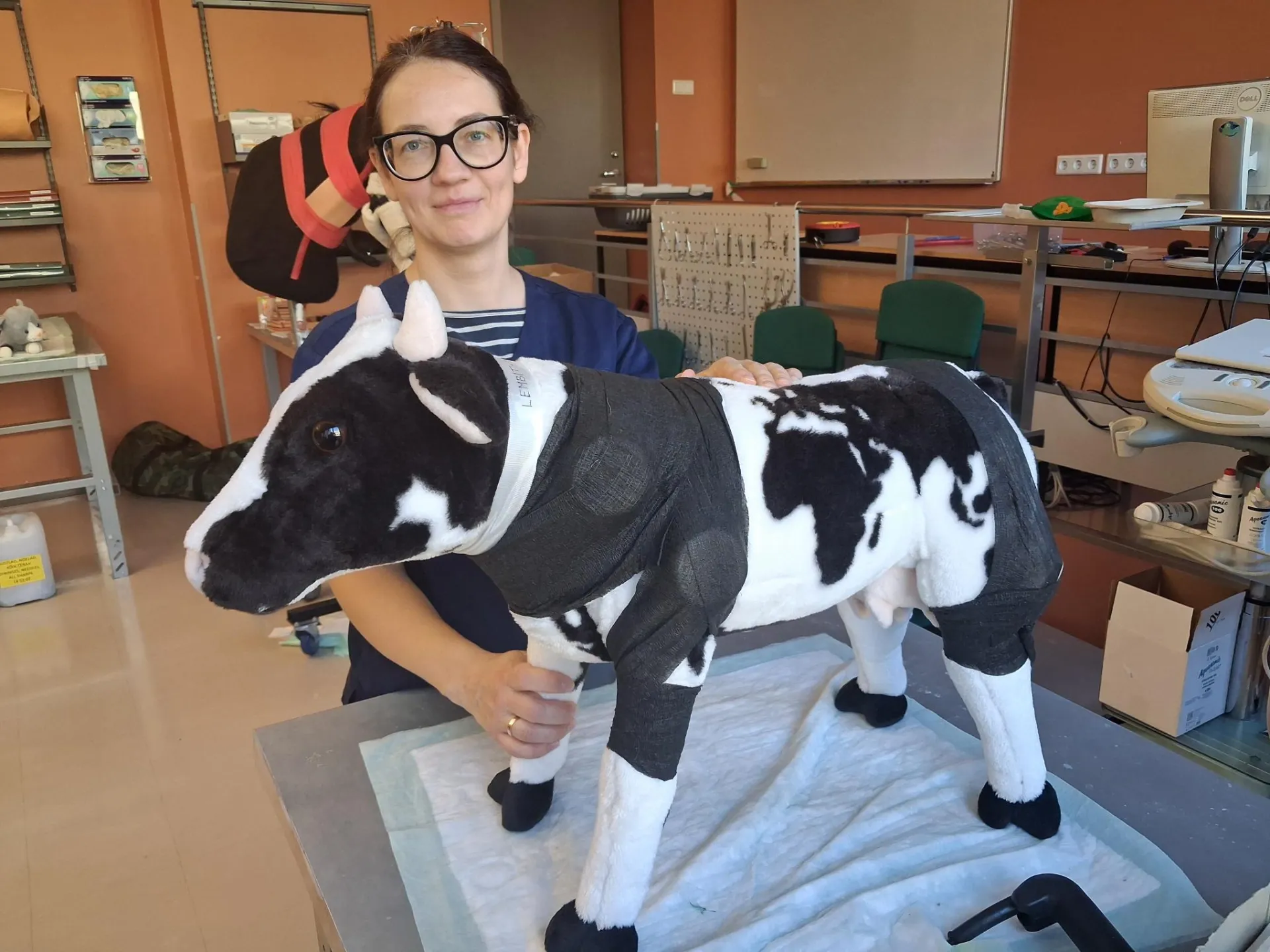
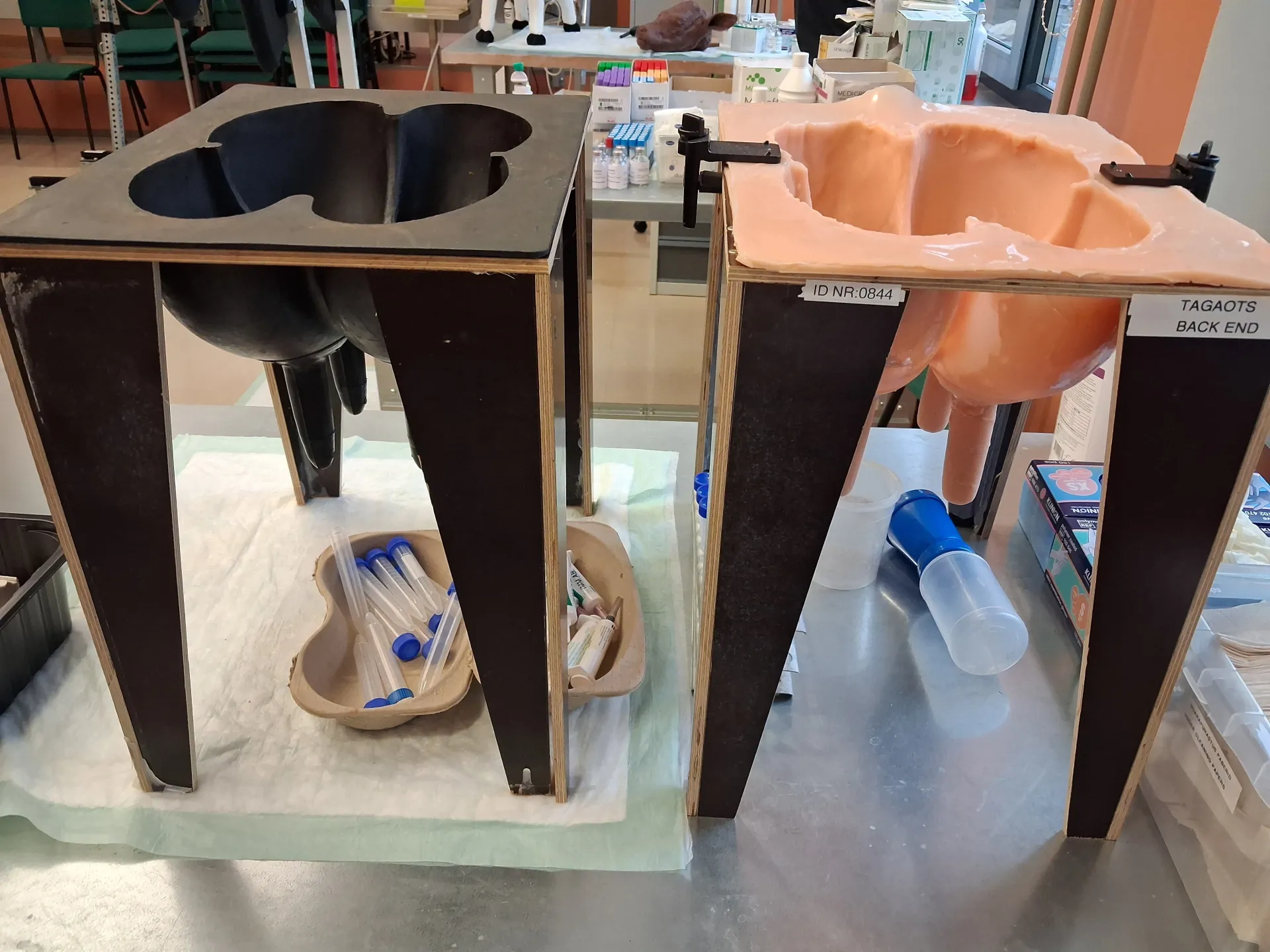
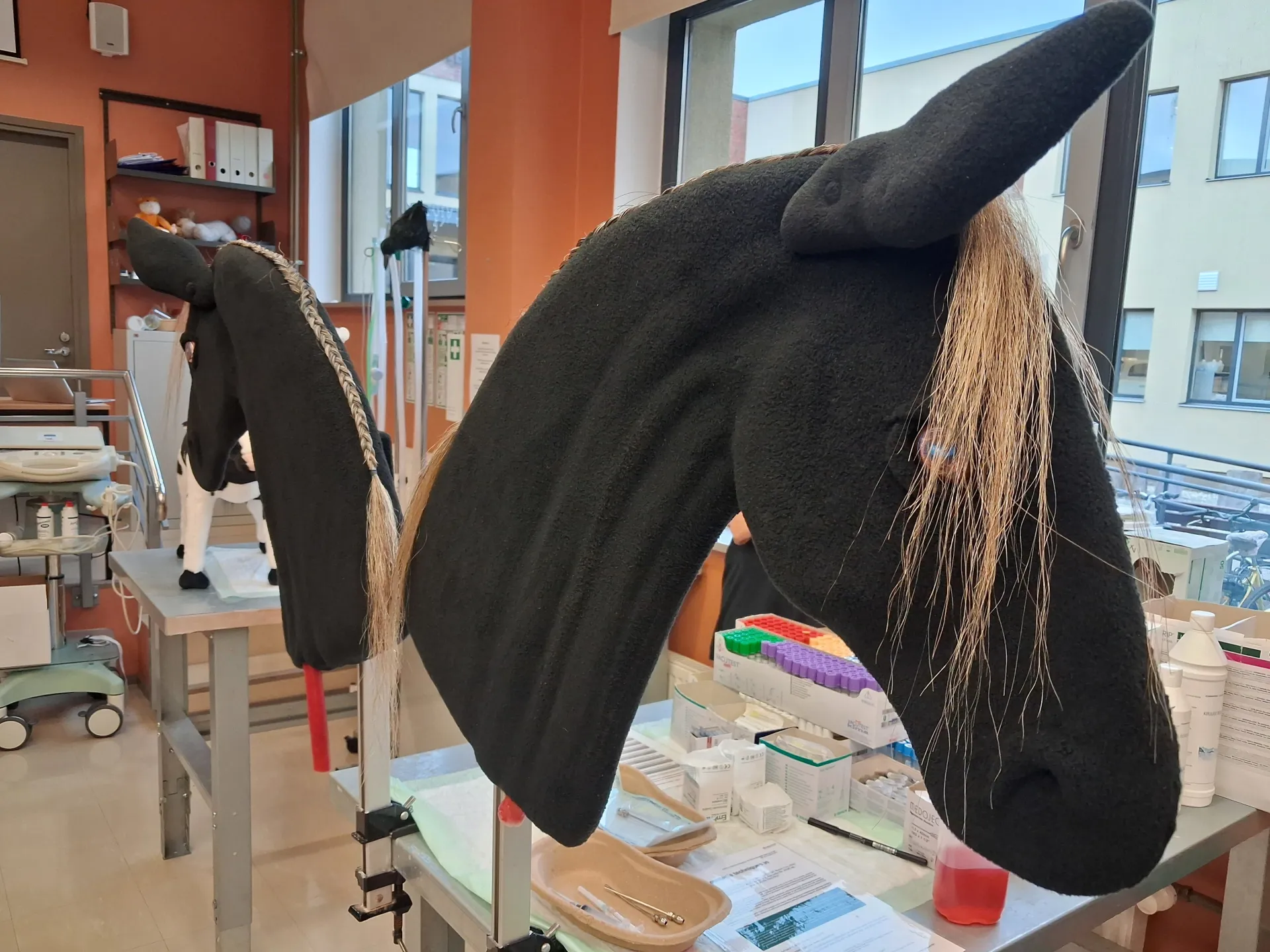
Development of the Clinical Skills Lab began in 2020, led by Kristel Peetsalu, head of the veterinary medicine programme. Not all of its training models are bought ready-made: some are built or adapted at the institute to meet teaching needs. Kalmer Kalmus and Triin Rilanto make training models on site.
A place to practise and strengthen skills
Third-year students use the lab most extensively. At the end of their course, they take a clinical skills examination, which they must pass before continuing to practical training in the veterinary clinic. Students return to the lab in their fifth year to refine their skills and connect what they practise with real cases they have encountered during clinical placements. They can also use the lab to work at their own pace on techniques they do not yet feel confident performing.
The principle Never the first time on a live animal is widely followed in veterinary and human medical education around the world. In the lab, students can practise each step of a new procedure repeatedly on a model before performing it on a live animal. This helps them develop their skills and confidence while protecting animal welfare.
From taking blood samples to managing clinical cases
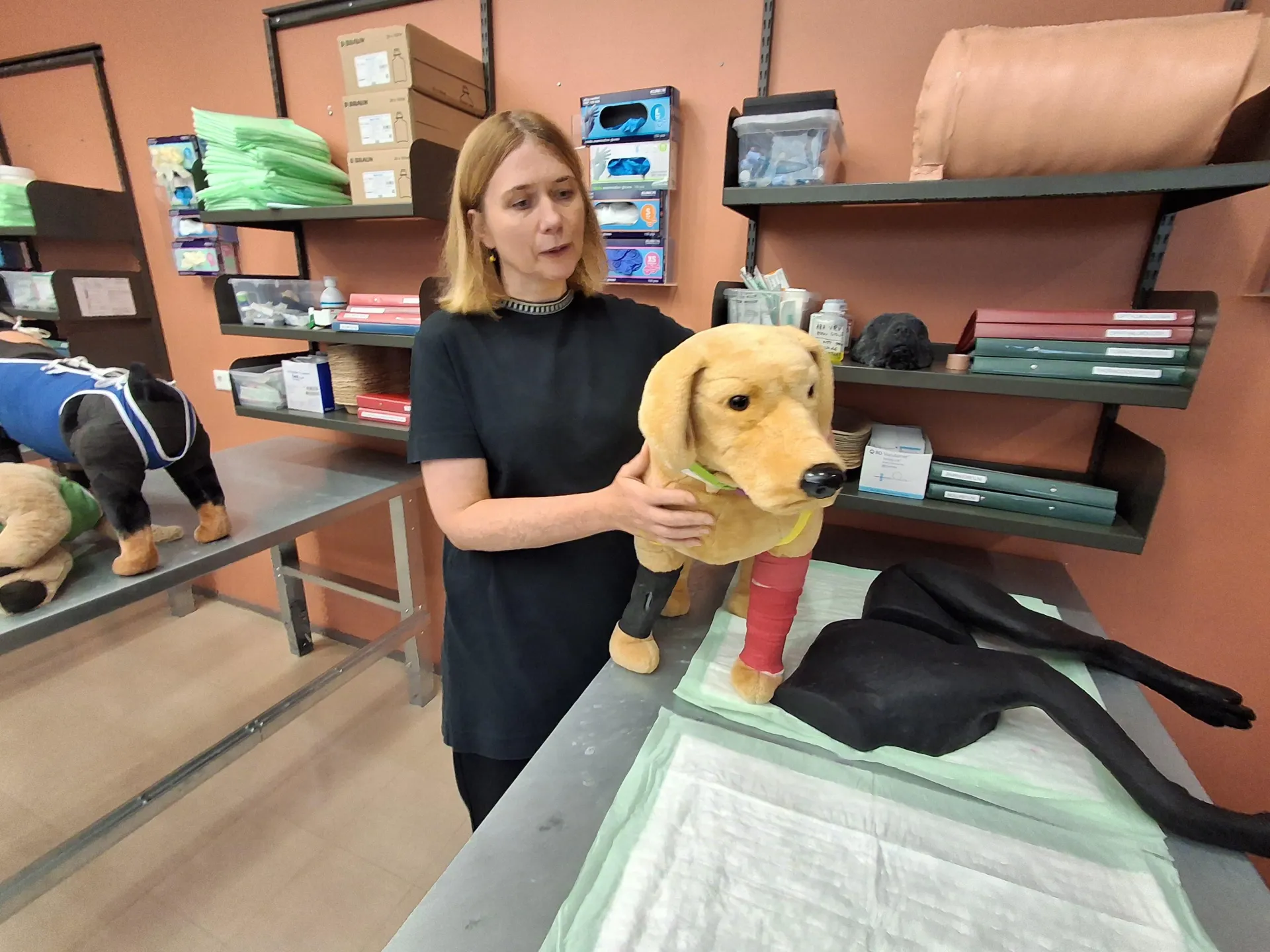
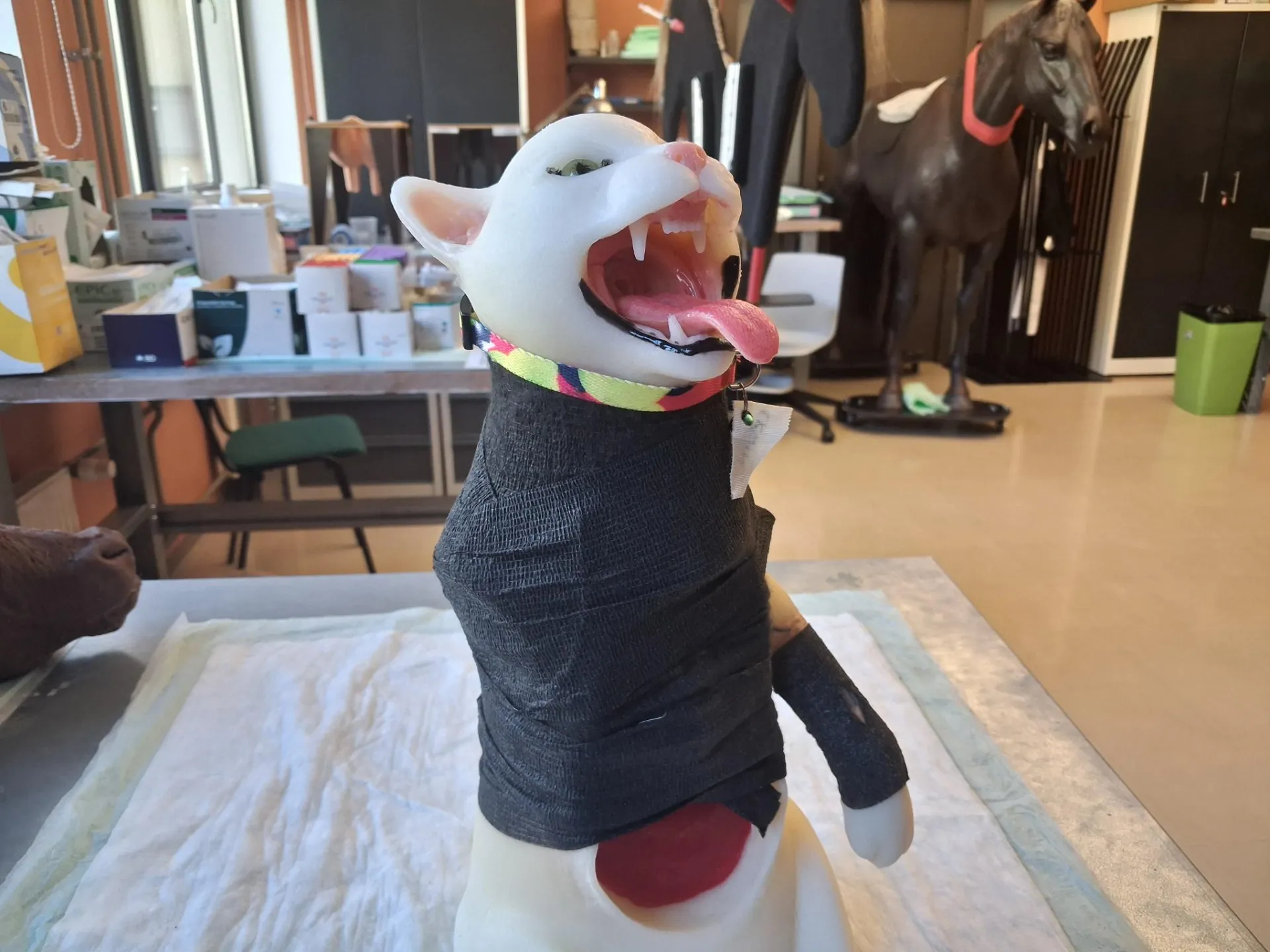
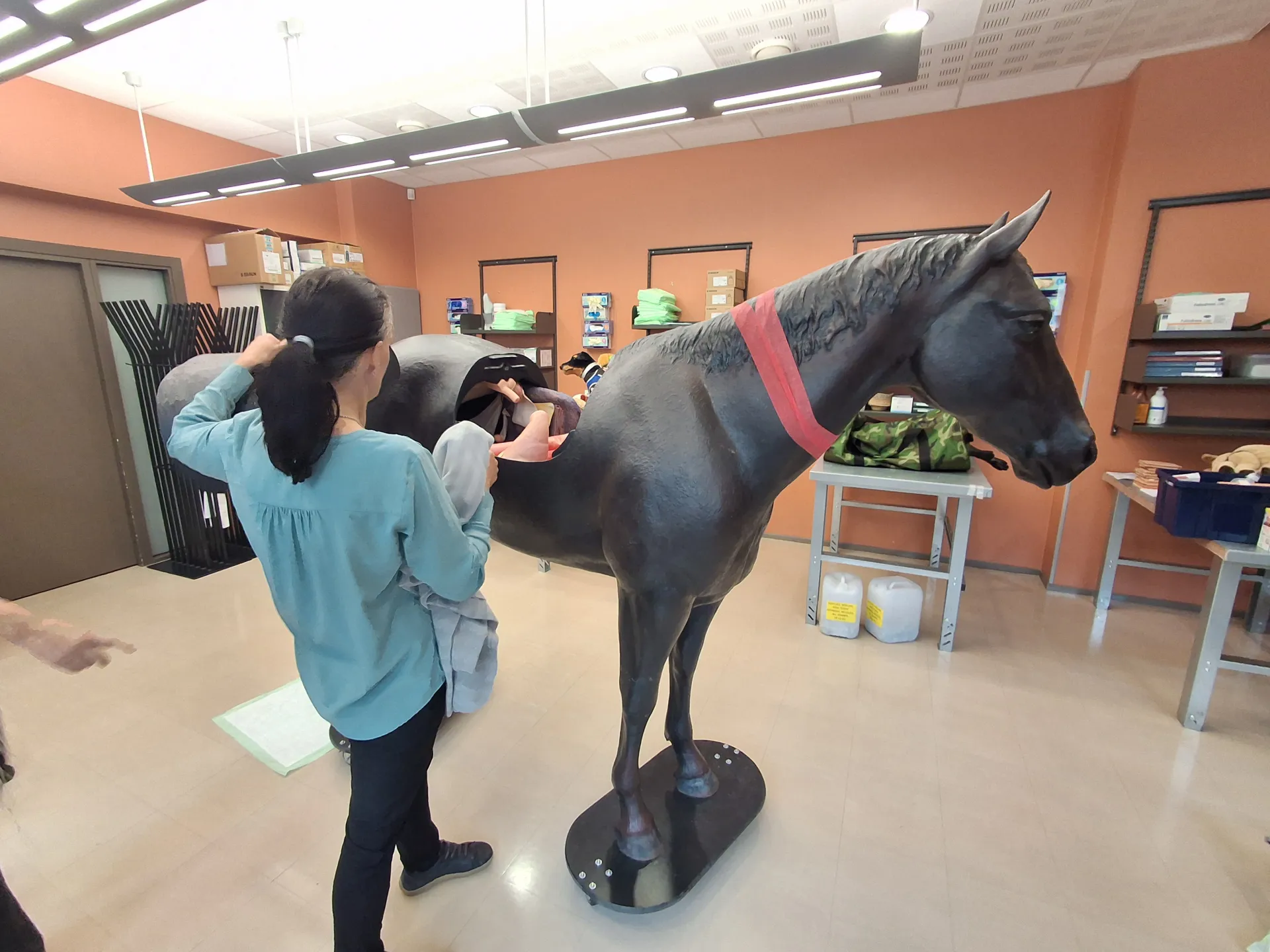
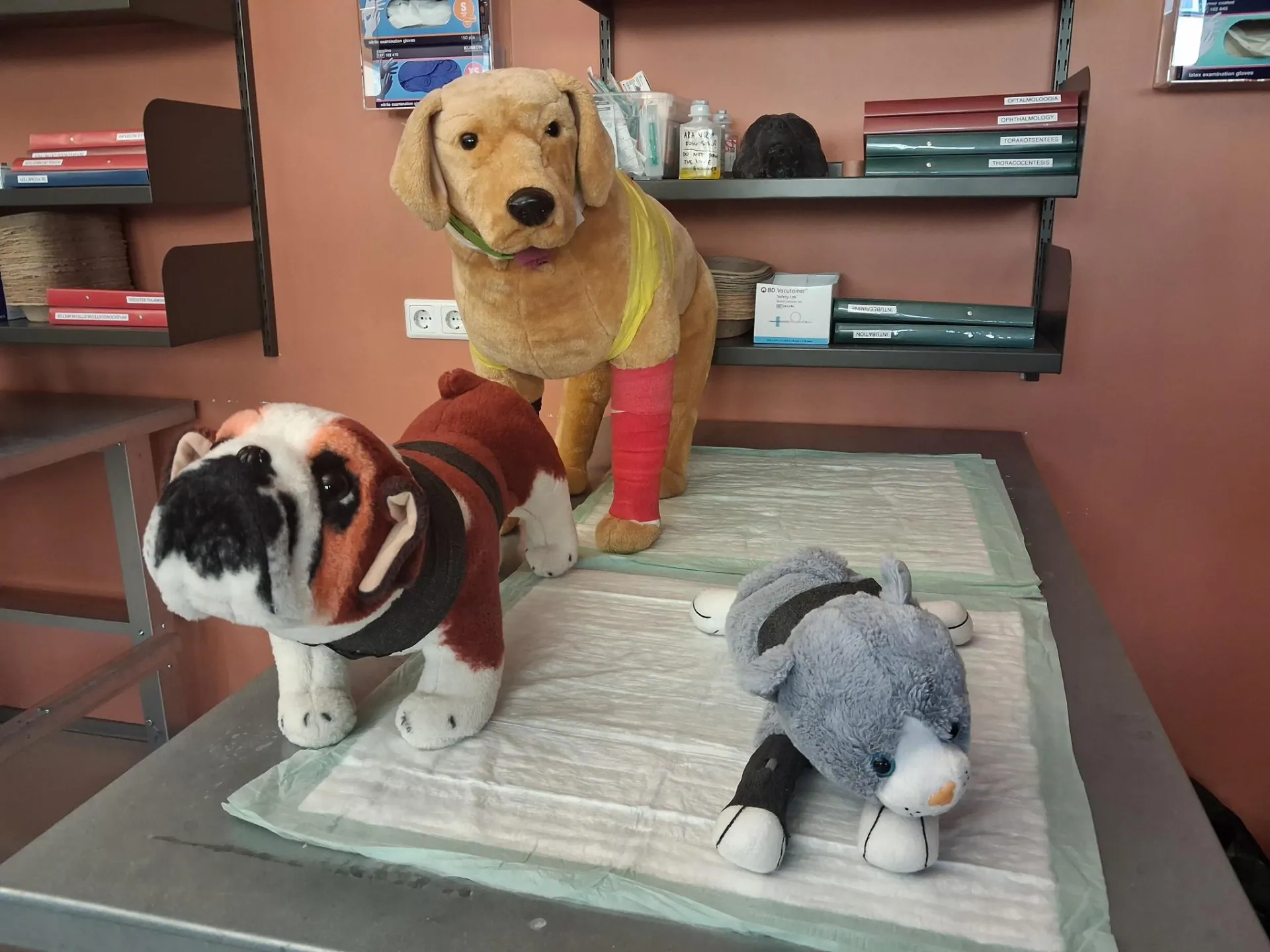
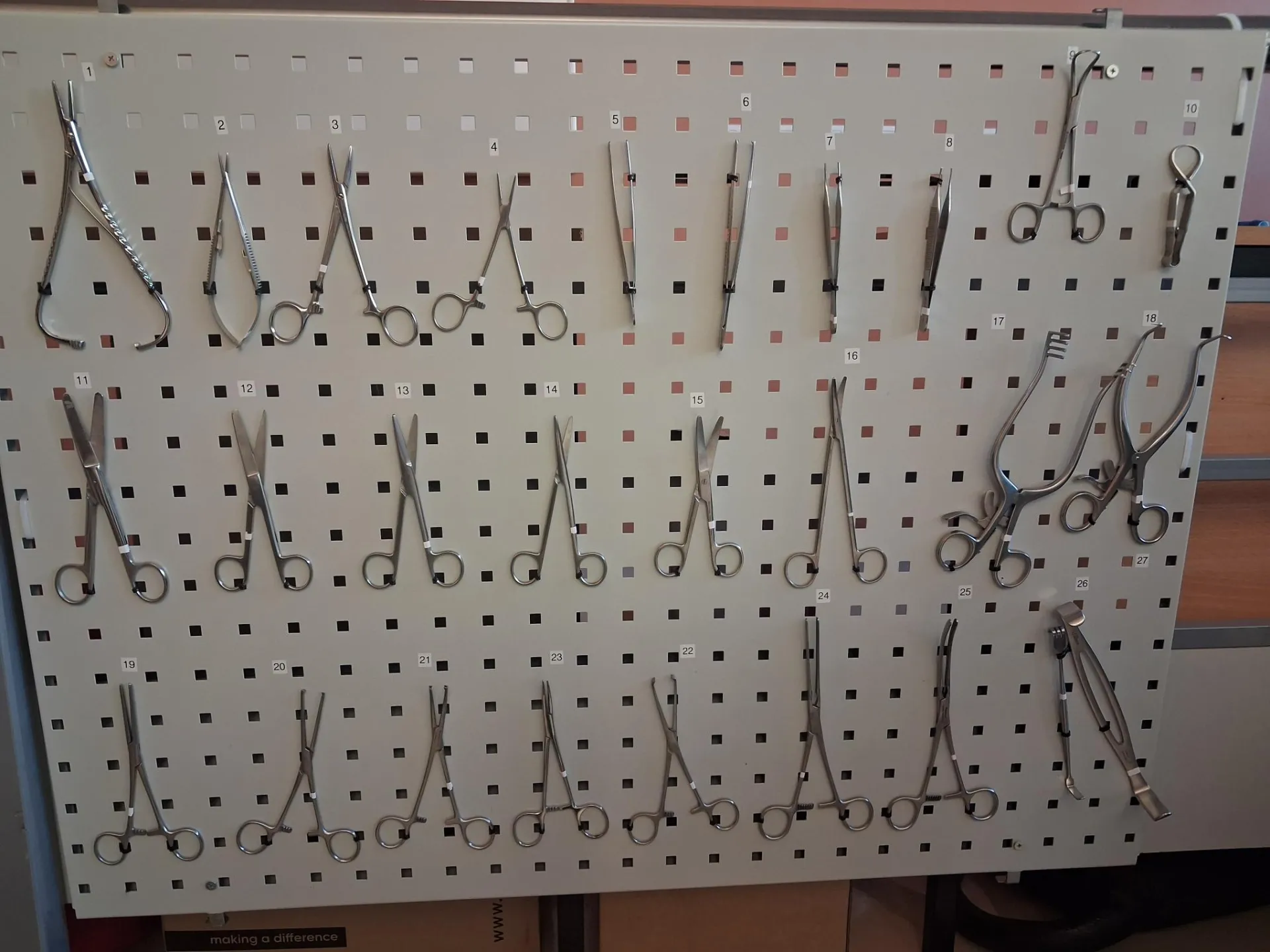
The range of skills practised in the lab is broad. Students learn how to approach an animal, assess its behaviour and restrain it safely. They also practise specific procedures, such as taking blood from a vein, urinary catheterisation, removing fluid from the chest cavity and conducting a rectal examination of a horse. Training models allow students to practise everything from examining skin and eye conditions to performing surgical procedures. They can also work through complete clinical cases, deciding which examinations are needed and carrying them out on a model.
A major advantage of training models is that students can repeat a task as often as necessary. For example, they can practise venepuncture until they have mastered the technique. Many students can use the same model over several years, and some models have even acquired names: the largest horse model is called Paula.
A veterinarian’s clinical skills also include communication with animal owners. In the lab, students practise listening to owners, asking questions and explaining medical information. Lecturers or fellow students can play the owner, while a clinical psychologist is also involved in the teaching and provides feedback on communication skills.
Learning from other countries
The team follows international developments, learns from practices in other countries and shares its own experience. Its members have taken part in study visits to Glasgow in the United Kingdom and to the Baltic and Nordic countries. They also participate in an international clinical skills teaching community, where they exchange ideas and attend joint training sessions.
The team is paying increasing attention to sustainability in the lab. Practice needs to be as realistic as possible: for example, students must learn to open packages of sterile gloves and syringes and follow the correct sequence of steps in a procedure. At the same time, the team is looking for ways to reuse materials and reduce unnecessary use of disposable supplies without compromising the quality of training.
At present, the training models are housed in several rooms across the teaching and clinic buildings, and a lack of space limits further development. Even so, the team continues to improve the lab so that students have the best possible conditions in which to practise clinical skills safely.
Editor:

Communications specialist
Institute of Veterinary Medicine and Animal Sciences
Administration of the Institute of Veterinary Medicine and Animal Sciences
5265488
5265488